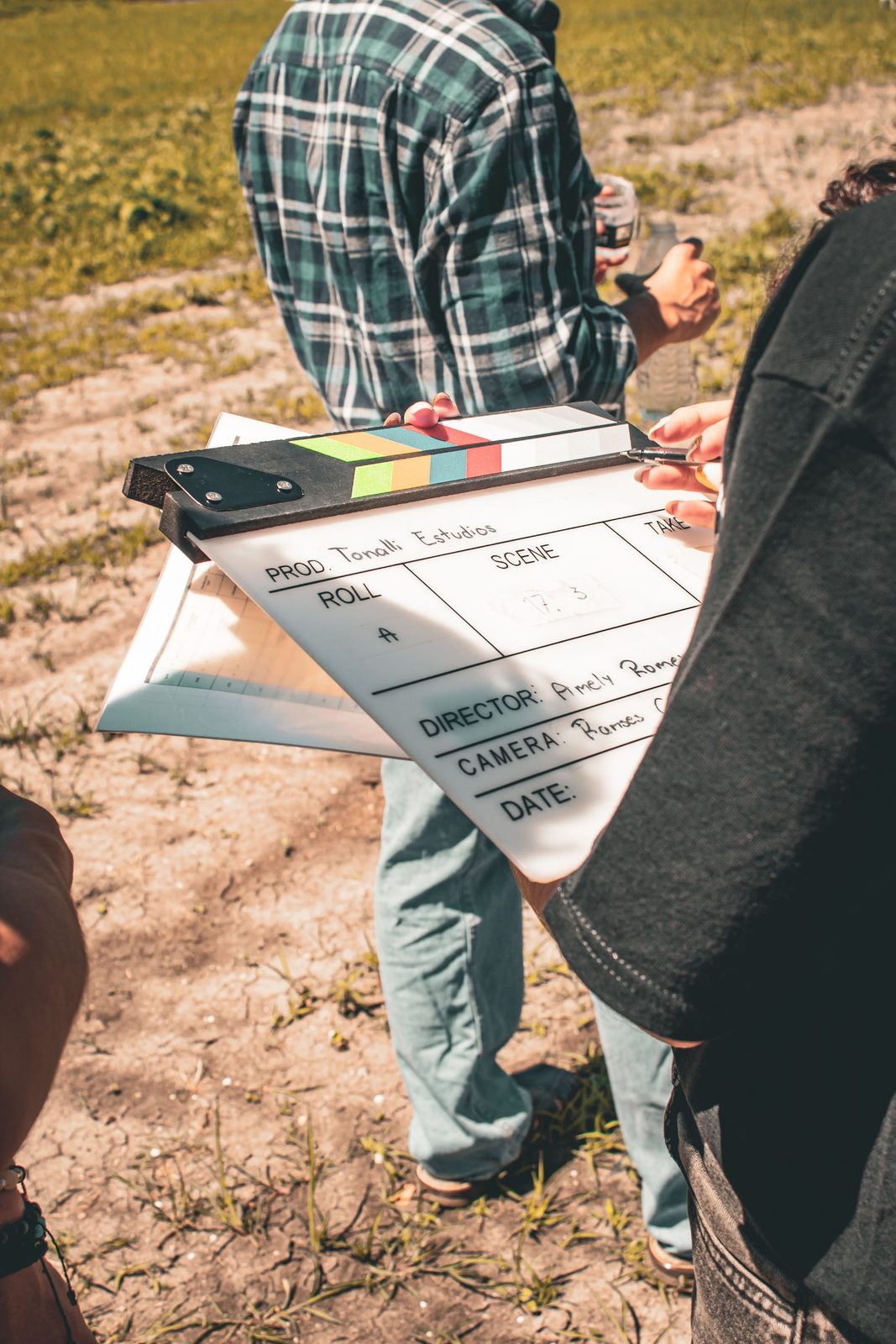
Anyone who does not know what to expect does not apply. That is why a complete shoot day stands here, as it runs on a regular video production — from travel in the morning to wrap. The clock times are typical and not binding: a photo set is shorter, a studio shoot with a large crew longer, and no day keeps exactly to the plan. What happens before that, meaning the path from application through the conversation to the signature, is on the process page. This text starts on the morning when everything is settled and only shooting remains.
The week before
At the latest three days before the date you receive a written overview, called a Call Sheet in the industry: location with address, travel, start, planned end, who is on set, what is being shot, which acts are intended and what you should bring.
If one of those facts is missing, ask. A production that three days beforehand cannot say where and for how long shooting happens has planned badly or does not want to commit. Both are a reason to question the date.
At the same time you settle your test status. What is required is a panel for sexually transmitted infections that on the shoot day may be no older than 14 to 30 days; which deadline applies stands on the Call Sheet. Appointment and finding together need around a week, so the test is not for the day before. What is checked and who pays is in the article on tests, deadlines and costs.
The evening before the bag is packed and the alarm is set twice. A checklist for the shoot day takes those decisions off you in the morning.
The morning: travel and papers
07:00 — Travel
Plan the journey so that a cancelled train does not sink the date. From about two and a half hours of travel, arriving the evening before is the calmer solution. Whether the overnight stay is covered you settle before you accept.
Eat something beforehand. There is catering on set, but the first item on the programme is rarely breakfast, and a shoot day on an empty stomach becomes long.
08:30 — Arrival, ID, contract
On set everyone reports to production management. ID check with identity card or passport, a copy for the documentation, signature under the model contract if that has not happened in advance. That is not mistrust but a statutory duty: without documented age verification no production may be published. A driving licence is not enough for that.
If a contract is put in front of you here for the first time, do not sign at once. You may read it, and you may stay seated for that while others wait. Contracts belong sent in advance.
After that: coffee, arrive, look at the set, meet people. Take the time. A set on which you are immediately pushed into preparation is working badly. Have it said who has which role and whom you turn to with which problem — on a well organised set production management does that of its own accord.
09:00 — The conversation about limits
The most important item of the day. Before any camera, what happens and what does not is walked through. Your Yes-No-Maybe list sits on the table, and everyone involved knows it — not only direction, but also the people you shoot with.
It is also fixed who your contact for stops is and which word stops the shoot at once. Such a word is a tool like “cut” and not a drama. Anyone who uses it does not have to explain.
Two things are not negotiable at this point. You can say no at any time, including to something you previously agreed to. And a no has no consequences for the agreed fee. If someone on set tries to relativise that point, that is the moment you call us.
It is also settled what is shot under which conditions. Condoms are mandatory for vaginal and anal intercourse, without exception and independently of which tests are on the table.
The morning: hair and makeup and the first setups
09:30 — Hair and makeup and wardrobe
Hair, makeup, wardrobe. On larger productions a makeup artist does that; on smaller ones you do it yourself — then that stands beforehand on the Call Sheet, and the production tells you which look is wanted.
Count on an hour in which little happens and at the same time you cannot leave. Headphones or a book are more useful here than nervousness.
11:00 — The first setups
Shooting happens in short sections with many interruptions: reset the lights, change the angle, check continuity. The same movement is recorded several times because the scene is later cut together from different viewpoints. That hair, clothing and position have to match is called Continuity and is the reason for most repeats.
This is the part that surprises most the first time: it is considerably more technical and less romantic than it later looks. Between setups people talk, drink, look at their phones.
What you do not have to bring is acting experience. What helps: patience and the willingness to repeat the same second five times without it looking irritated the fifth time.
Midday and the main part
13:00 — Break
Food belongs to the production and is supplied. An hour, at least. If a production shoots through without offering a break, that is a warning sign — and you may demand it, even if nobody else asks.
14:00 to 17:00 — The main part
The longest phase of the day. The same applies as in the morning: short sections, many interruptions, regular check-ins whether everything is in order. If needed it is stopped; that needs no reason.
The afternoon is the point at which concentration drops and mistakes happen. Drink enough, eat in between, and say so if you need a quarter of an hour. A break costs the production less than a scene that becomes unusable.
17:30 — Acceptance, billing, wrap
The production checks whether everything is in the can. Until that is settled you stay on set — that is why the planned end on the Call Sheet is a guide and not a guarantee.
After that: finish the paperwork, settle the billing. Usual is a transfer within 14 days against an invoice, together with a written statement. Cash on set does not exist with the productions we place. A payment without a receipt is no use to you at the latest at the tax return.
You also receive in writing what happens to the material: which channels, which period, which territory. These facts stand in the contract and are not renegotiated at the end of a shoot day.
The way home belongs to the day. Anyone who leaves the studio at 18:00 and travels two hours was on the road for twelve hours. Do not plan this evening.
The day after
Expect an exhaustion that does not match the number of hours. Standing, waiting, concentration under artificial light and the presence of strangers cost more strength than the shoot itself. Anyone who is also employed is better off keeping the next day free.
We get in touch one to two days later — not to sell the next date, but to ask how it was. What did not fit on set we want to know: days that were too long, missing breaks, a tone that was not in order. Criticism of a production changes whom we continue to work with.
The first shoot day is for most people less dramatic than expected: long, technical, friendly in the breaks. Anyone who counts on that is well prepared. The path there starts with the application, which costs nothing and to which we reply within 48 hours — including on a refusal.
Note: This article places the practice in general terms and is not a substitute for legal or tax advice.
Questions about this?
Schreib uns, oder sieh dir an, wie eine Zusammenarbeit abläuft.