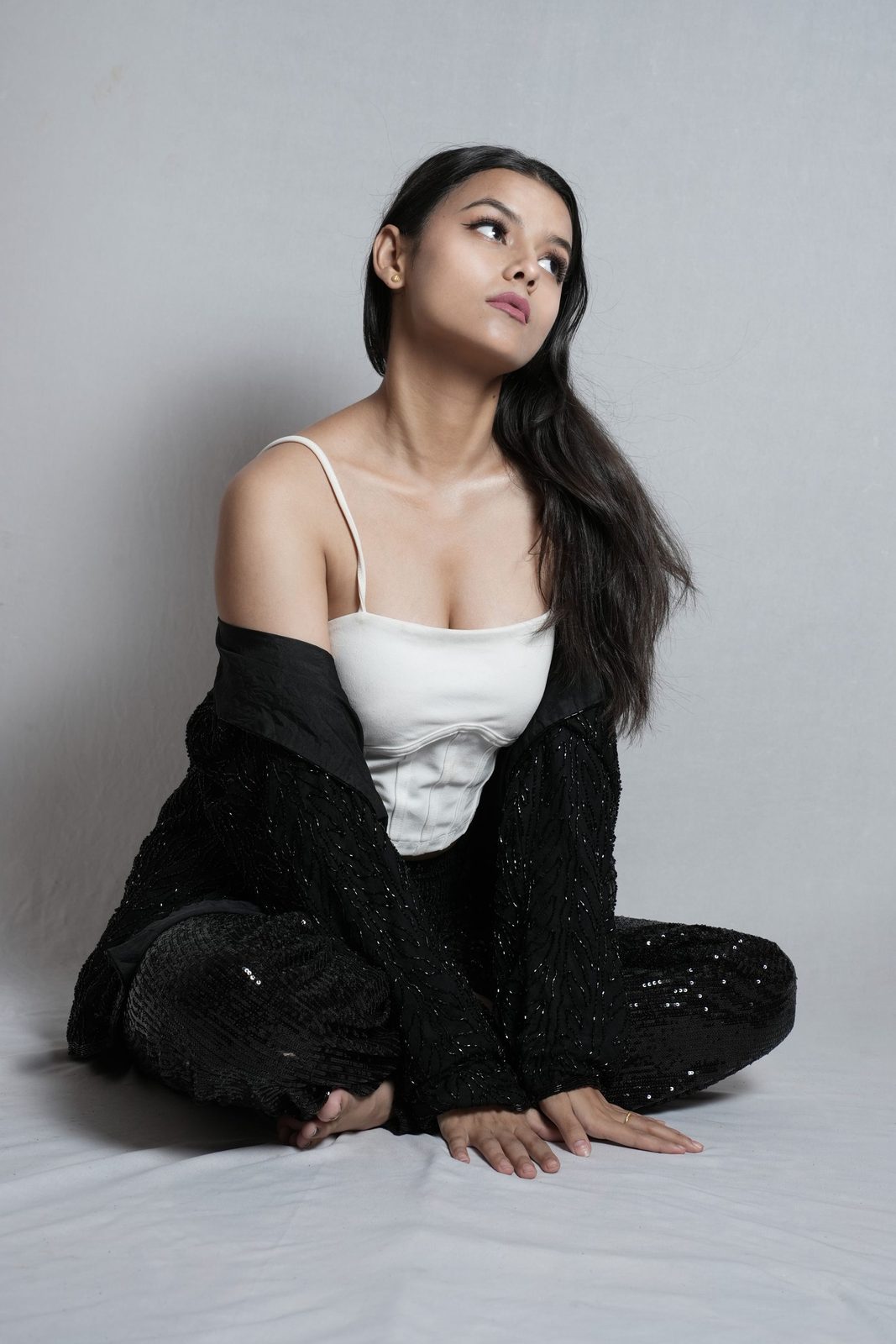
With most providers you only learn after sending the application which photos are required. That is unnecessary. The requirements stand here in advance, so you can decide before you hand over your data. Application photos as an erotic model do not have to come from a photographer and do not have to cost anything: three phone shots in daylight are enough, and the first application goes without a picture at all. What we actually need, how you make the three shots yourself, which photos regularly lead to a refusal and where the pictures sit afterwards stands here.
Why the first application goes without a photo
In the first step we need nothing at all. Name, date of birth, contact, place — that is all. We get in touch within 48 hours, we talk, and only then does the question of pictures arise.
That is deliberate. Photos are the point at which most people drop out — not because they do not want to, but because they do not know where the pictures land. Anyone who has settled that question before uploading decides more calmly.
The second reason is just as practical: in the conversation it sometimes emerges that someone is looking for something other than what we place. Then nobody has sent recordings to an address they would later rather not have known. What the form asks and how it continues afterwards is on the application page.
Which three recordings we need in the second step
Three pictures, made with the phone, without makeup or lightly made up:
- Frontal portrait. Daylight, neutral background, hair out of the face, no filter. Look into the camera lens, not at the screen.
- Full body dressed. Close-fitting clothing or underwear, so that the proportions are recognisable. Whole figure in the picture, straight camera, arms loose beside the body.
- Full body from the side. Same conditions, turned 90 degrees.
That is it. No nude shots with the application. If a production later has to see more, that is announced and justified, and you decide then — knowing which production it is and what the pictures are used for.
These three recordings are not a portfolio. They answer the cast exactly one question: how you look when nobody helps. Poses, locations and a change of wardrobe come later, if at all.
Anyone who wants to work anonymously regularly asks at this point about the portrait. We need it anyway, because without a face nobody can cast; it is not published. Whether your face is later seen in the film is a completely different decision — it belongs on your Yes-No-Maybe list, not in the application photos.
How you make the photos yourself in twenty minutes
You need a window, a free wall and something to stand the phone on. No ring light, no tripod, no app.
Light
Stand with your face to the window, the phone between you and the window. Overcast sky is better than direct sun, because hard shadows change the face. Ceiling lights off: mixed light from a bulb and daylight makes the skin blotchy.
Background and distance
A smooth wall in white, grey or beige. About one step from the wall, so that your shadow is not photographed with you. For the full-body picture the camera needs around three metres of distance — use the main camera on the back instead of the selfie camera and work with the self-timer.
Camera height
On the portrait at eye height, on the full-body picture at hip height. From above it distorts the proportions, from below just as much. That distortion is one of the reasons why some applicants are not recognisable on set.
The most common reasons for refusal
In practice application photos almost never fail on looks. They fail on the recording.
- Too dark. Taken in the evening in room light. Use daylight at the window; that solves 80 percent of all problems.
- Filter and beauty mode. The most common mistake. If the picture does not show how you look, it is worthless for the cast — and it shows at the latest on set, where a whole shoot day was then planned wrongly.
- Crop. Full body means: head and feet in the picture.
- Screenshots from Instagram. Too small in resolution, compressed, usually edited.
- Group photos. Happens more often than you think. Anyone else in the picture has not consented to the pass-on.
- Recognisable surroundings. Street sign, house number, company logo, club shirt in the background. Remember that pictures are passed on.
- Recordings from five years ago. Understandable, but unusable. Current means: from the last months.
None of these points is a final no. We ask again if the pictures are no use and everything else fits. It only leads to a refusal if nothing usable comes several times — because then we cannot propose you to a production.
What we do not require
No professional shoot, no finished book, no photographer. Anyone who sells you a paid shoot for an application earns on you instead of on the placement — that is one of the clearest marks of unreliable offers. With us application, conversation, casting, placement and contract review cost nothing.
A Sedcard arises later and from material that arises on paid productions anyway. You do not need it for the start.
Not to be confused with the application photos is the ID-Shot: a recording with your ID that on the shoot day serves the documentation duty. It has nothing to do with the cast and is not published.
Where the pictures sit
On our server in Germany, accessible to two people. They are passed on only to a concrete production, for a concrete enquiry, and only after you have agreed. Not to mailing lists, not to databases, not to third parties for viewing.
On request we delete everything. An informal mail is enough; within seven days it is gone. Without asking why.
Part of it sits with you, though: phone photos contain metadata, sometimes with a GPS position and a device ID. Therefore do not send the pictures as the original from the gallery, but through a function that reduces them, or remove the location data beforehand. What is technically possible on anonymity and what nobody can guarantee is in the article on working anonymously.
As far as looks are concerned
There is no type that is sought. Productions cast differently, and the market for performers beyond the classic schema — older, curvier, more unusual — is larger than the one for what everyone takes to be the norm.
That is why it is the wrong reflex to keep a feature out of the pictures that you take for a disadvantage: large tattoos, scars, grey hair, an unusual build, glasses. In a concrete enquiry that is often exactly what is sought, and we can only offer what we see. What actually stands in those enquiries is described in the article on what productions look for when they cast.
Anyone who wonders whether they look good enough is asking the wrong question. The right one is whether the work fits them.
Questions about this?
Schreib uns, oder sieh dir an, wie eine Zusammenarbeit abläuft.