When we get in touch one or two days after the first shoot, the answer surprisingly often comes out similarly: what surprised people was not the action in front of the camera, but everything around it. The number of people in the room. The heat. The waiting. How technical and how unromantic the whole thing runs. The following points are what performers regularly report back to us after the first scene, summarised rather than quoted. They are not a warning, but what people would have liked to know beforehand.
How many people are in the room
The first sentence after the first shoot often turns on the number of people present. Camera, lights, sound, direction, production management, makeup, set assistance: on a regular video production five to ten people quickly stand in the room, all doing something different, and most of them do not look at you while you work.
That is exactly the point that eases things once you have experienced it. These people are at work, not watching. The camera assistant watches the focus, the sound person a rustle, makeup a smeared lip. Who is responsible for what can be read beforehand, and it helps to know the roles before you come into the room.
How bright and how hot it is under the lights
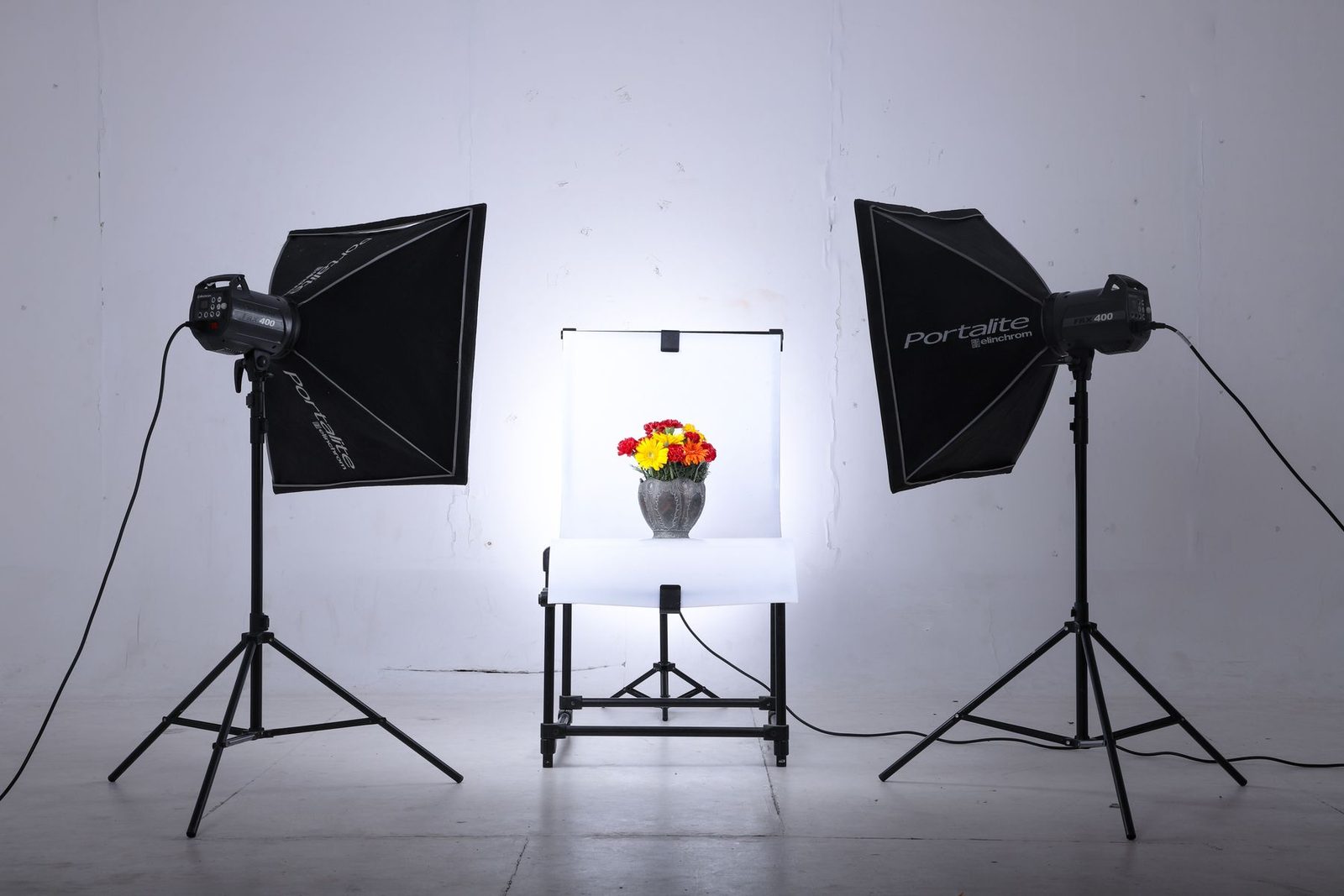
Studio light is a physical experience. It comes from several directions, it is hard, it dazzles, and it warms. After twenty minutes under full lighting the skin is damp, the makeup has to be touched up, and concentration becomes noticeably more tiring.
In practice that means: drink a lot, use every break to cool down and tell the crew if you feel dizzy. Circulation problems under the lights are not a sign of weakness, but a reaction to heat and standing for a long time, and every experienced crew knows them.
How technical the process is and how little private
The most common report of all. Filming happens in short sections, several times, from different angles, with position changes that serve the picture and not the feeling. In between, light is corrected, continuity is checked, the microphone is reset.
On top of that comes how little private the room is. Doors stand open, someone comes through the dressing room with a cable, changing happens on the side. At the same time the action in front of the camera is spoken about with a matter-of-factness that at first feels odd: who lies where, which hand where, what happens next.
This matter-of-factness is the protection and not the problem. As long as everything is spoken about openly, there are no hints, no grey zones and no situation in which someone assumes something. A set on which people stay silent and improvise instead is the more uncomfortable one.
Anyone who counted on an atmosphere is at first irritated. After an hour that usually tips into the opposite: the technical sobriety makes the matter easier, because it turns the process into work. It helps to understand it beforehand as craft and not as a situation you have to feel your way into. How such a day is structured from arrival to wrap we have described across a complete shoot day.
How much waiting there is
The largest part of a shoot day consists of waiting. Waiting for the build, for makeup, for a reset, for someone who is still missing. Between two shots there are often twenty minutes in which you sit ready in a robe and can do nothing.
The reason for that is harmless: every new angle requires a new lighting setup, and building light takes longer than shooting. What matters to know is that this time belongs to the shoot day. The fee is agreed for the day and not for the minutes in front of the camera, and if a shoot day becomes markedly longer than planned, that is a point that is spoken about beforehand.
This empty time wears more than the shots themselves, because you cannot switch off and are still not needed. Anyone who knows that packs accordingly: headphones, a book, snacks, warm socks. And anyone who uses the waiting time to talk with the crew has the easier afternoon.
That the body does not always play along
A point that occupies many people beforehand and surprises them afterwards: physical reactions stay away, disappear in the middle of a shot or do not come on command. That applies to everyone involved, to male performers as well as to female performers.
On set this is a known circumstance and not an incident. Plans are changed, another shot is brought forward, a break is taken. Nobody comments on it, and nobody cuts the fee because of it. The tension that arises from the expectation is the actual disturbance, and it dissolves once you have experienced how casually the crew handles it.
What comes afterwards
The day after is regularly underestimated. Common is an exhaustion that does not match the physical effort, because it comes from duration, heat, tension and strangeness together. Keep the following day free if you can.
Some additionally report an emotional aftertaste. Not regret as a rule, but a mix of emptiness and being stirred up that lasts one or two days and then disappears. That is not unusual after intense working days with physical closeness. It helps to count on it, instead of reading it as a sign that something went wrong.
That is why aftercare is not a luxury, but part of the work: not straight into the car and three hours home alone, but taking off the makeup in peace, showering, eating, talking briefly, experiencing the set as finished. Take someone for the evening, even only on the phone. And if something did not fit, tell us. Criticism of a production changes who we continue to work with, and which protection rules apply is under safety on the film set.
What the second scene changes
Almost all reports end in the same place: the second time it was markedly easier. The reason is banal. What consumes attention on the first shoot is not the action, but the unknown, and after one day that is used up.
Anyone who goes into the first shoot with realistic expectations comes through more relaxed: long, bright, hot, technical, with a lot of waiting and friendly people doing their work. What you should still settle beforehand if you start without prior experience is less the question whether you can do it than the question whether the conditions are right.
Note: This article provides a general overview and is not a substitute for medical or psychological advice. Anyone who is still under strain for longer after a shoot should seek professional support.
Questions about this?
Schreib uns, oder sieh dir an, wie eine Zusammenarbeit abläuft.