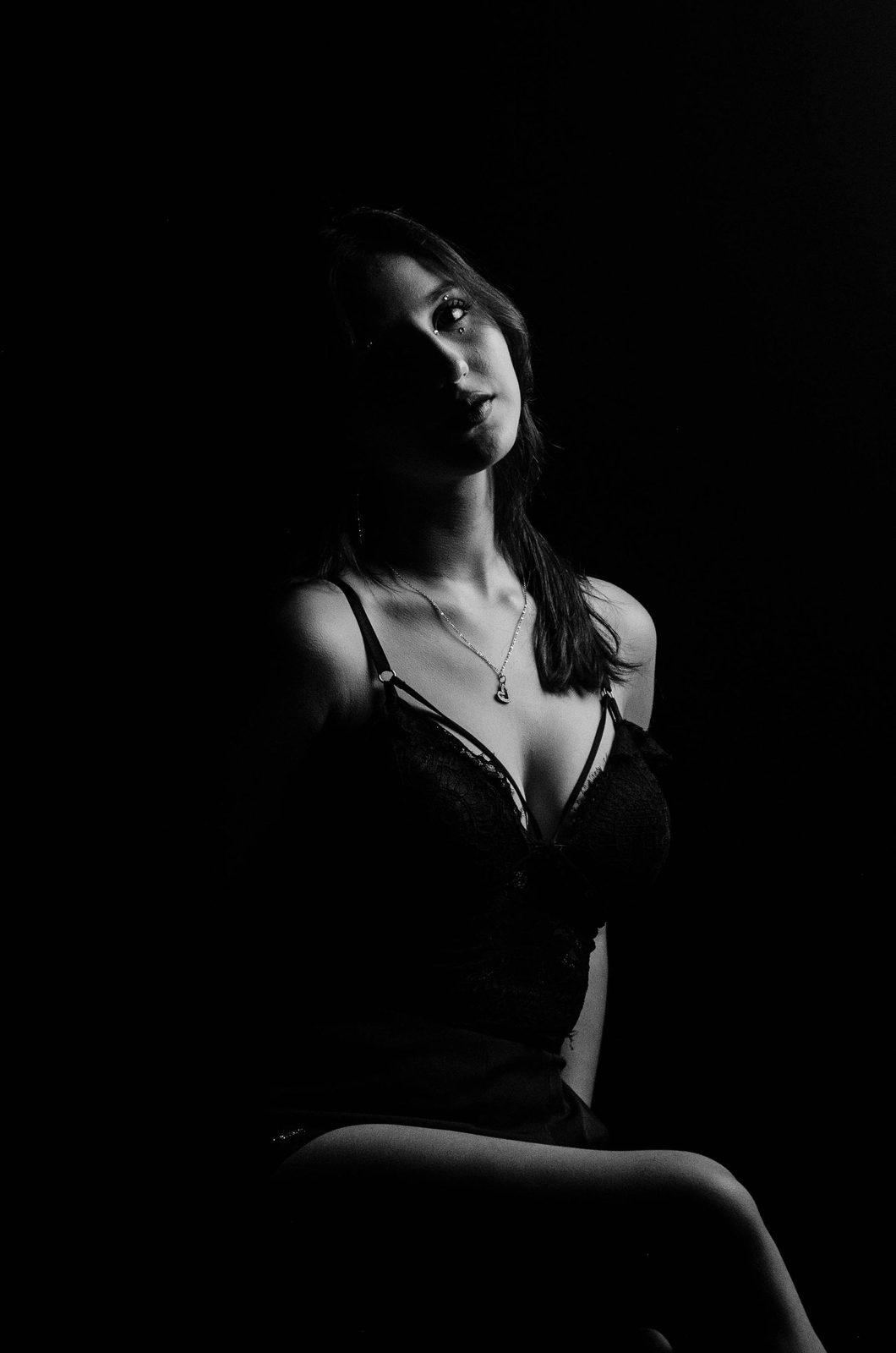
Working without a face is a creative decision and not only a protective measure. The difference matters: protection is about making identification less likely. Building something is about people still recognising you and finding you again. Creating anonymous content therefore does not mean showing less, but moving recognition — from facial features onto body, light, visual language, voice and tone. That works. It costs more work per shot, and it costs money, and both should be part of the decision.
Protection and building are two different aims
What anonymity achieves technically and legally, and where it ends, is in the article on working anonymously. The missing part here is the other direction: how do you build something when the strongest recognition feature is gone?
With protection the question is: what gives me away? With building it is: what do people recognise me by? Both questions have to be answered at the same time, and sometimes the answers contradict each other. A distinctive tattoo is an excellent recognition feature and at the same time the greatest risk in the whole picture.
Anyone who mixes the two makes mistakes in both directions: they show too much because it looks good, and they become interchangeable because they remove everything characteristic.
What works without a face
The crop. Consistently below the eye line, or tighter. What matters is the consistency: a crop that changes from image to image looks like a stopgap. A crop that always sits the same way looks like a decision.
Mask, cloth, hat, hair. A mask is a stylistic device and has to fit the rest. It must not look like embarrassment, but like intention — then it carries recognition, because it itself becomes a feature.
Lighting. Low-key, backlight, silhouette, hard shadows. Light is by far the most effective tool, because it conceals and shapes at the same time. A consistent lighting mood is a signature.
Camera work. A first-person perspective, a fixed frame, the same focal length, the same height. That creates familiarity without needing a face.
Voice and sound. The voice binds strongly. It is also an identifying feature that people who know you recognise at once. The decision for or against it should be made deliberately, not on the side.
Style instead of a face. The same colour world, the same edit, the same type, the same music, the same tone in the texts. That sum is the work that replaces the face. It is unspectacular and it is the core of the matter.
A deliberately placed detail carries more here than any mask: a hand, a posture, a recurring object, a crop that always starts at the same point. Recognition comes from repetition, not from range — and this is exactly where most people work against themselves, because variety feels more productive.
What becomes harder
Attachment. Faces create closeness in seconds. Without a face it takes more repetitions before someone remembers. Count on a longer run-up, not an equally fast one.
Recognition. Your image has to be recognisable as yours in half a second. Without a face only a consistent visual language can do that — and that requires you to give up variation that is open to others.
Trust. Some viewers suspect deception behind anonymity: the wrong person, old material, someone else on the chat. The only thing that helps against that is reliability over time — answering, delivering, keeping arrangements.
Communication. The question about the face comes constantly, in every variant, often as a bargaining attempt. A short, always identical wording in a visible place anticipates most of these conversations. Without it you discuss the same thing every week.
Bookings. Productions that require a face fall away, and that is the larger part of the market. What remains without a face are formats in which that already belongs to the visual language. Which production types those are can be clarified beforehand, and that clarification belongs before the first booking, not on set.
The honest calculation
Productions without face shots pay less. The reason is not disdain, but usability: without a face there are no usable title images, no trailers in the usual sense and less secondary use. Material that is harder to use is paid worse. The ranges for booked productions are under earnings; anyone who excludes face shots will find themselves more towards the lower end.
For your own marketing the same applies one floor down: less reaction per publication, a longer build, more effort per image through light, crop and checking. Anyone who expects the same return in the same time will be disappointed.
The calculation is therefore not “with a face or without”, but: what is the difference worth to you? For many the answer is clear, because being identifiable is not an option for them. That is a perfectly sound decision — it should only be made with open eyes and not on the assumption that it comes without a loss.
Also calculate the case that you change the decision later. The path from without a face to with a face is possible at any time; the reverse is not. That is why the anonymous variant at the start is the decision with the more open doors, including for someone who is still unsure.
The technical sources of error
Almost all unmaskings happen not through the face, but through side matters. The list is short and it repeats:
- Body features. Tattoos, moles, scars, distinctive hands, teeth, nail shape.
- Jewellery. Ring, watch, necklace, piercing — especially pieces you also wear privately and have on in private photos.
- Reflections. Mirrors, window panes, screens, spectacle lenses, a tap, a door handle, polished furniture. When you film, the reflection moves; when you check a still, it does not.
- Background details. Window shape, the view, sockets, posters, post on the table, labels, wall colour. Anyone who shows the same wall in private pictures has made the connection themselves.
- Voice and language. Dialect, turns of phrase, laughter, even typing habits in texts.
- Metadata. Recording device, serial number, location, timestamp, editing history, file name, folder name in the cloud. Before every upload: export, strip the metadata, set a neutral file name.
The most useful check is inconvenient: look at every image in full screen before uploading, corners first, then everything shiny. With videos, pause at three points as well and do the same.
If the face is visible after all
A single image is enough to lift the separation, and you do not get it back. Therefore: no live formats without a delay, no uploading between two appointments, no publication without a preview. If there is a person you trust with this, have them read it — four eyes find the reflection that two miss.
And if material appears where it does not belong, that is not a case for self-help. Which protection rules apply in the booking process and what we take on in such cases is under safety.
Note: This article provides a general overview and is not a substitute for legal advice.
Questions about this?
Schreib uns, oder sieh dir an, wie eine Zusammenarbeit abläuft.